
Folsomia Candida
Folsomia candida Species Profile (White Springtail)
Folsomia candida is among the most widely studied Collembola globally, recognized for its pale coloration, parthenogenetic reproduction, and ecological significance in soil ecosystems. This comprehensive profile details its morphology, habitat, diet, reproductive biology, and husbandry, offering in-depth guidance for researchers and hobbyists alike.


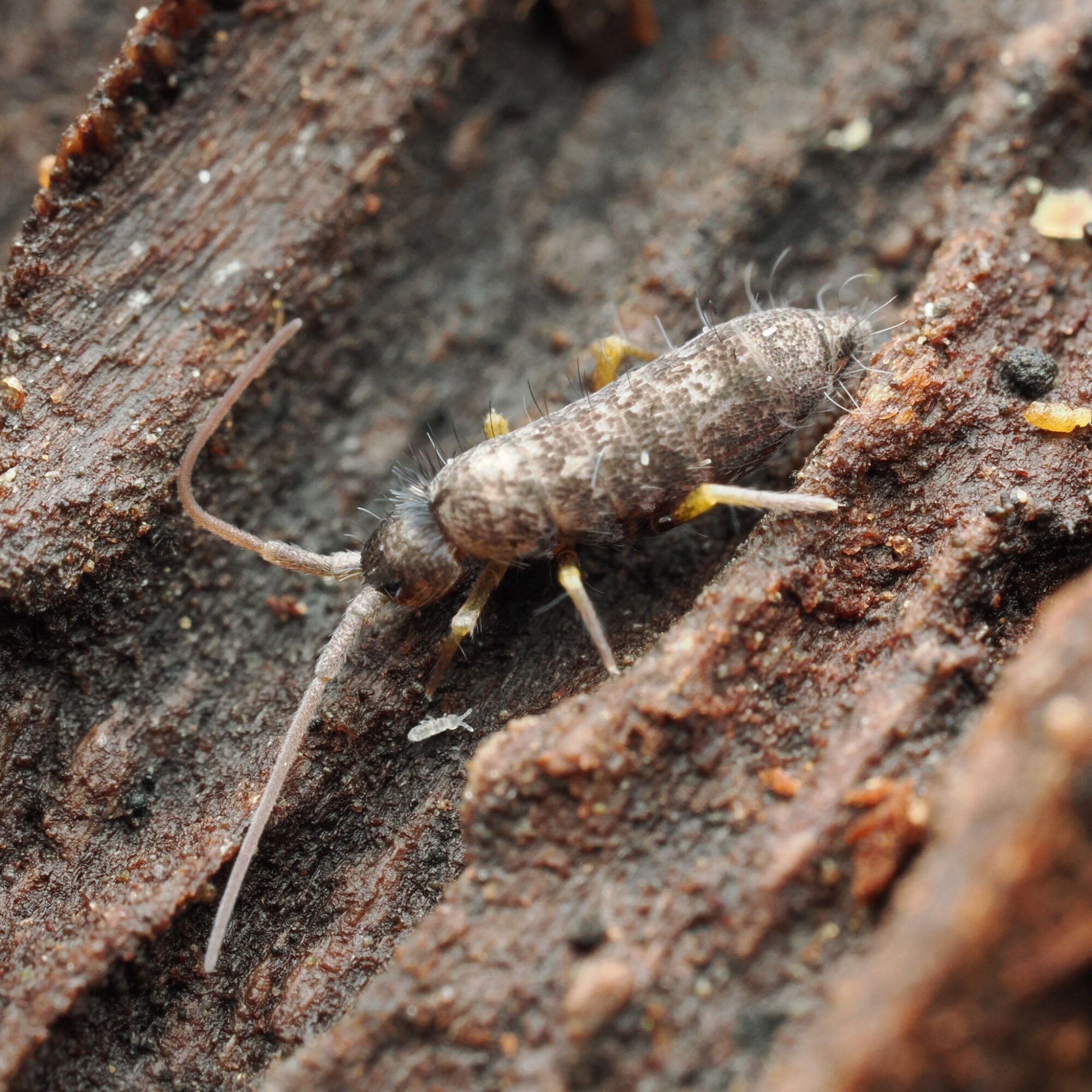


Folsomia candida Species Profile
Folsomia candida (White Springtail) is a small, eyeless detritivore found globally in moist habitats. It plays a key role in soil health and nutrient cycling and is a cornerstone model organism for ecotoxicology and laboratory research. This species profile aims to detail its morphology, life cycle, behavior, and husbandry practices, offering essential insights for both scientific and the hobbyist community.
Species Quick Reference
Average Body Length: 0.9–1.5 mm
Coloration: White to translucent
Reproduction: Parthenogenetic (all-female populations)
Optimal Temperature: ~22–24°C (72–75°F)
Preferred Humidity: 85–95% RH (minimum ~70%)
Adult Lifespan: ~30–70 days (sometimes longer in cooler conditions)
Typical Diet: Fungi, yeasts, decaying organic matter, commercial microfauna foods, grains
Use in Research: Toxicological bioindicator species
Use in Hobby: Bioactive clean-up crew; live meso feeder

Morphology
Adult Folsomia candida measure approximately 0.9 to 1.5 millimeters in body length. They have a slender, elongate form that curves gently along the anteroposterior axis when viewed laterally. Their coloration ranges from white to pale cream, lacking any pigment, a feature associated with their adaptation to life beneath the soil surface. The cuticle is smooth and covered in fine setae, producing a velvety appearance when viewed under magnification. Their antennae consist of four primary segments, with the fourth subdivided into numerous small annulations that aid in detecting chemical cues in the environment. The furcula is present, though relatively short, and serves as the mechanism for their famous “spring” when disturbed. Notably, F. candida lack eyes entirely, reflecting their evolutionary specialization for living in dark, humid habitats such as soil, leaf litter, and compost.


Taxonomy & Systematics
Folsomia candida belongs to the order Collembola, family Isotomidae, and genus Folsomia. First described by Willem in 1902, it remains taxonomically stable despite minor strain variations observed in laboratory cultures. Its placement within Entomobryomorpha reflects morphological features like its slender body and reduced pigmentation.
Habitat Preferences
Naturally, F. candida occupies niches beneath leaf litter, within compost, and in decomposing wood. It flourishes in greenhouse soils and vivarium substrates where stable humidity exceeds ~70%. Its dependence on consistent moisture restricts its range to habitats with reliable microclimates, as desiccation rapidly decimates populations.
Distribution & Biogeography
F. candida exhibits a cosmopolitan distribution across Europe, the Americas, Asia, and Oceania, largely facilitated by soil trade, horticulture, and the bioactive pet industry. It thrives in moist, organic-rich microhabitats while avoiding sun-exposed or desiccated environments. Its global spread underscores its adaptability and ecological resilience.
Reproduction & Life Cycle
Reproducing exclusively through parthenogenesis, F. candida populations are entirely female. Eggs are ~0.1–0.13 mm, initially translucent, turning opaque before hatching. Development progresses through several molts over 28–35 days at ~22°C, with adult lifespans ranging from 30–70 days, occasionally longer under cooler conditions.
Feeding & Ecology
As a saprophagous detritivore, F. candida consumes fungal hyphae, bacteria, algae, and fragmented organic matter. Its grazing fragments debris and stimulates microbial turnover, significantly contributing to nutrient cycling. In cultures, it accepts a varied diet of brewer’s yeast, fish flakes, powdered grains, spirulina, and vegetable matter.
Importance in Science & Hobby
F. candida serves as a bioindicator in OECD toxicity tests, essential for assessing soil contamination and environmental stress. In hobbyist circles, it’s celebrated as a foundational “clean-up crew” species in bioactive terrariums, managing mold and waste while doubling as a live food source for dart frogs, reptiles, and amphibians.
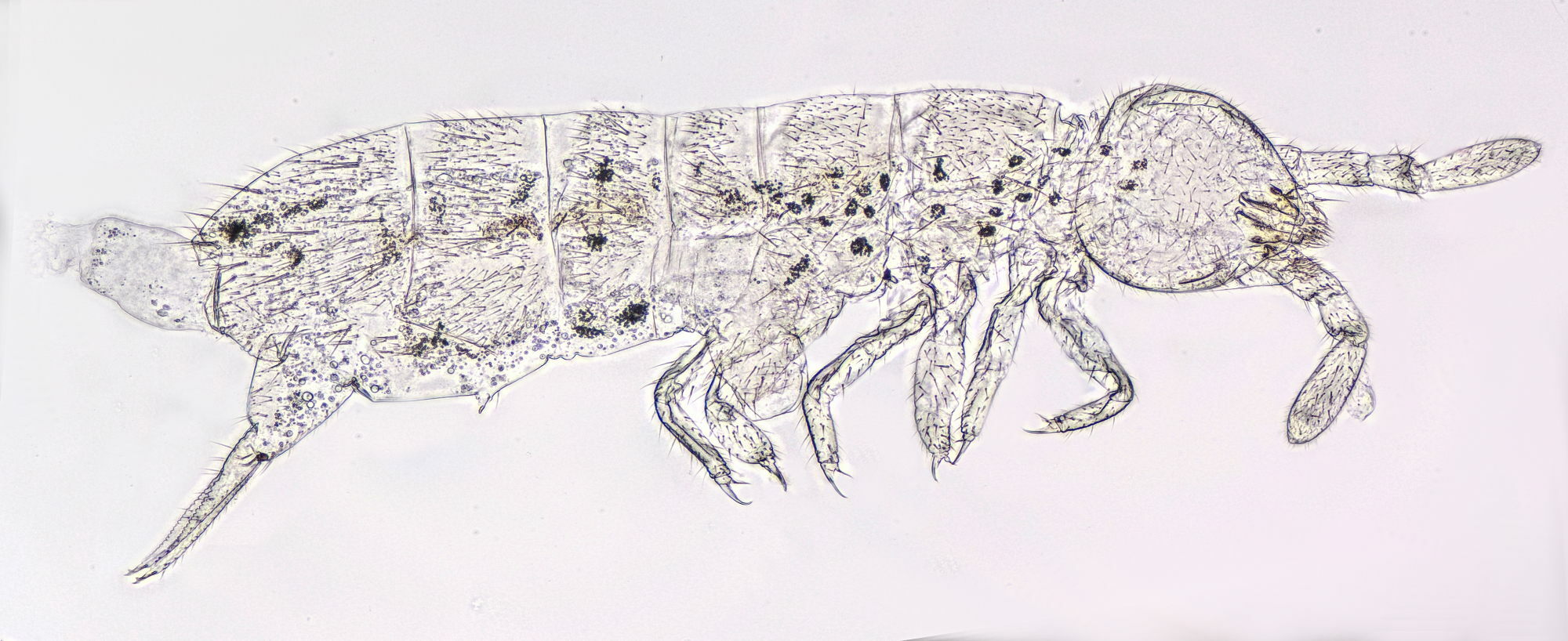
Lateral view micrograph of an adult Folsomia candida under high magnification. The specimen exhibits the elongate, slender habitus characteristic of Isotomidae. The body segments display fine, regularly arranged setae distributed across the cuticular surface, contributing to a velvety texture. The head capsule is prominent and rounded, bearing four-segmented antennae with the distal Ant. IV subdivided into multiple annulations, indicative of enhanced chemosensory capacity. No ocelli are present, consistent with anophthalmic adaptation to edaphic habitats. Thoracic and abdominal segments are smoothly contiguous without pronounced constrictions. Legs are well-developed, each terminating in a single unguis (claw). The furcula is visible in a flexed, ventral position beneath the abdomen, with dens and mucro structures partially discernible. Numerous internal inclusions, likely gut contents and pigment granules, are apparent due to the translucent cuticle. This morphology reflects specialization for life in moist, low-light microhabitats

Culturing and Husbandry
Folsomia candida is widely recognized as the foundational species for springtail cultures in both scientific research and bioactive hobbies. Cultures thrive in containers ranging from small deli cups to larger breeding tubs, maintained at 18–24°C with humidity above 70%. Substrate options include charcoal, soil mixes, and increasingly popular clay-based media blended with calcium carbonate and trace minerals, offering excellent moisture retention, and reduced mold risk. Feeding should be measured carefully, ensuring food is consumed within 24–48 hours to prevent mold blooms. Their prolific reproduction and ecological utility make F. candida an indispensable resource for both laboratory and hobbyist settings.

Further Reading on Springtails
-
What Are Springtails Used For? Clean-Up Crews, Feeders, and Soil Bioindicators
Tiny Allies, big impact What Are Springtails Used For? Clean-Up Crews, Feeders, and Soil Bioindicators Springtails (order Collembola) are tiny, wingless soil arthropods that play outsized roles in both natural ecosystems and human endeavors. Often under 2 mm long, they are among the most abundant of all…
-
What is Mesofauna?
A World Beneath Your Fingertips What is Mesofauna? Take a handful of soil. To most, it’s nothing, just dirt, lifeless and mute. Hold it closer. Feel its weight. In that small clump lies an entire metropolis, thrumming with creatures so small some could slip between grains of…
-
The Delongi Dilemma: How Citizen Scientists Uncovered a 2,000-ID Mistake
When a Pacific Northwest springtail didn’t match its name, a few curious naturalists dug deeper—and uncovered a taxonomic mix-up affecting over 2,000 IDs. What followed was a microscope-fueled reexamination of Ptenothrix maculosa, a rediscovery of Ptenothrix delongi, and a triumph for community science in action.


Folsomia Candida
Small in size but mighty in impact, Folsomia candida is a true powerhouse of the mesofaunal world. In scientific research, it serves as a sentinel species, detecting soil contamination from heavy metals, pesticides, and emerging pollutants like microplastics. Its consistent, clonal reproduction makes it a reliable model organism for ecotoxicology, soil health studies, and environmental regulation.
In the natural world, it tirelessly recycles organic matter, breaking down leaf litter, fungal growths, and decaying debris. Through this hidden work, it enriches soils, fosters microbial diversity, and fuels nutrient cycles that sustain entire ecosystems.
Within bioactive terrariums and vivariums, F. candida steps in as the ultimate clean-up crew. It devours mold, excess food, and waste, maintaining hygienic conditions for delicate reptiles, amphibians, and invertebrates. Hobbyists rely on its prolific breeding to provide a renewable source of live food for microfauna-feeding animals, all while keeping enclosures balanced and thriving.
From laboratories to forest floors, and from scientific studies to glass terrariums, Folsomia candida wears many hats. It is a recycler, a bioindicator, a clean-up specialist, and a silent guardian of both soil ecosystems and bioactive habitats. Its quiet versatility secures its reputation as one of the most important, and perhaps underappreciated species in the hidden world beneath our feet and we’re proud to feature it as our first Species Profile.
Subscribe Now!
Join our newsletter for the latest updates on springtail species profiles, research, and new articles!
References
- Hopkin, S.P. (1997). Biology of the Springtails (Collembola). Oxford University Press.
- OECD. (2009). Test No. 232: Collembola Reproduction Test in Soil. OECD Guidelines for the Testing of Chemicals, Section 2. OECD Publishing. DOI: 10.1787/9789264076273-en.
- Fjellberg, A. (1998). The Collembola of Fennoscandia and Denmark. Part I: Poduromorpha. Fauna Entomologica Scandinavica, Vol. 35. Brill.
- Fjellberg, A. (2007). The Collembola of Fennoscandia and Denmark. Part II: Entomobryomorpha and Symphypleona. Fauna Entomologica Scandinavica, Vol. 42. Brill.
- Menta, C. (2012). Soil Fauna Diversity – Function, Soil Degradation, Biological Indices, Soil Restoration. In: Lameed, G.A. (Ed.) Biodiversity Conservation and Utilization in a Diverse World. InTech. DOI: 10.5772/51091.
- Janssens, F. (2024). Collembola Taxonomic Database. Available at: www.collembola.org
- Christiansen, K., & Bellinger, P. (1998). The Collembola of North America North of the Rio Grande. Grinnell College, Iowa.
- Fountain, M.T. & Hopkin, S.P. (2005). Folsomia candida (Collembola): A “standard” soil arthropod. Annual Review of Entomology, 50, 201–222. DOI: 10.1146/annurev.ento.50.071803.130331
- Bitzer, R.J., Buckelew, L.D. & Pedigo, L.P. (2002). Effects of transgenic herbicide-resistant soybean varieties and systems on surface-active springtails (Entognatha: Collembola). Environmental Entomology, 31(3), 449–461. DOI: 10.1603/0046-225X-31.3.449
- Chagnon, M., et al. (2015). Risks of large-scale use of systemic insecticides to ecosystem functioning and services. Environmental Science and Pollution Research, 22(1), 119–134. DOI: 10.1007/s11356-014-3277-x
- Fountain, M.T. & Hopkin, S.P. (2004). Biodiversity of Collembola in urban soils and the use of Folsomia candida as a bioindicator of heavy metal pollution. European Journal of Soil Biology, 40(3-4), 123–129. DOI: 10.1016/j.ejsobi.2004.10.002
- Ponge, J.F. (2000). Vertical distribution of Collembola (Insecta: Apterygota) and their food resources in organic horizons of beech forests. Biology and Fertility of Soils, 32(6), 508–522. DOI: 10.1007/s003740000279
- Sousa, J.P., et al. (2004). Toxicity of soils treated with pesticides to Folsomia candida. Environmental Toxicology and Chemistry, 23(6), 1488–1497. DOI: 10.1897/03-219
- Heupel, K. (2002). Folsomia candida in risk assessment of contaminated soils: A literature review. Pedobiologia, 46(3), 215–223. DOI: 10.1078/0031-4056-00131
- Hopkin, S.P. (2002). Collembola. In: Encyclopedia of Soil Science. Marcel Dekker, New York, pp. 244–246. DOI: 10.1081/E-ESS-120018523
- Cassagne, N., et al. (2006). Impact of land use on Collembola communities and soil functioning in southern France. European Journal of Soil Biology, 42(Suppl 1), S334–S340. DOI: 10.1016/j.ejsobi.2006.07.010
- Petersen, H. (2002). General aspects of Collembolan ecology. Pedobiologia, 46(3-4), 225–234. DOI: 10.1078/0031-4056-00132
- Filser, J., et al. (2016). Collembola in ecotoxicology—any news or just boring routine? Applied Soil Ecology, 94, 113–121. DOI: 10.1016/j.apsoil.2015.05.003